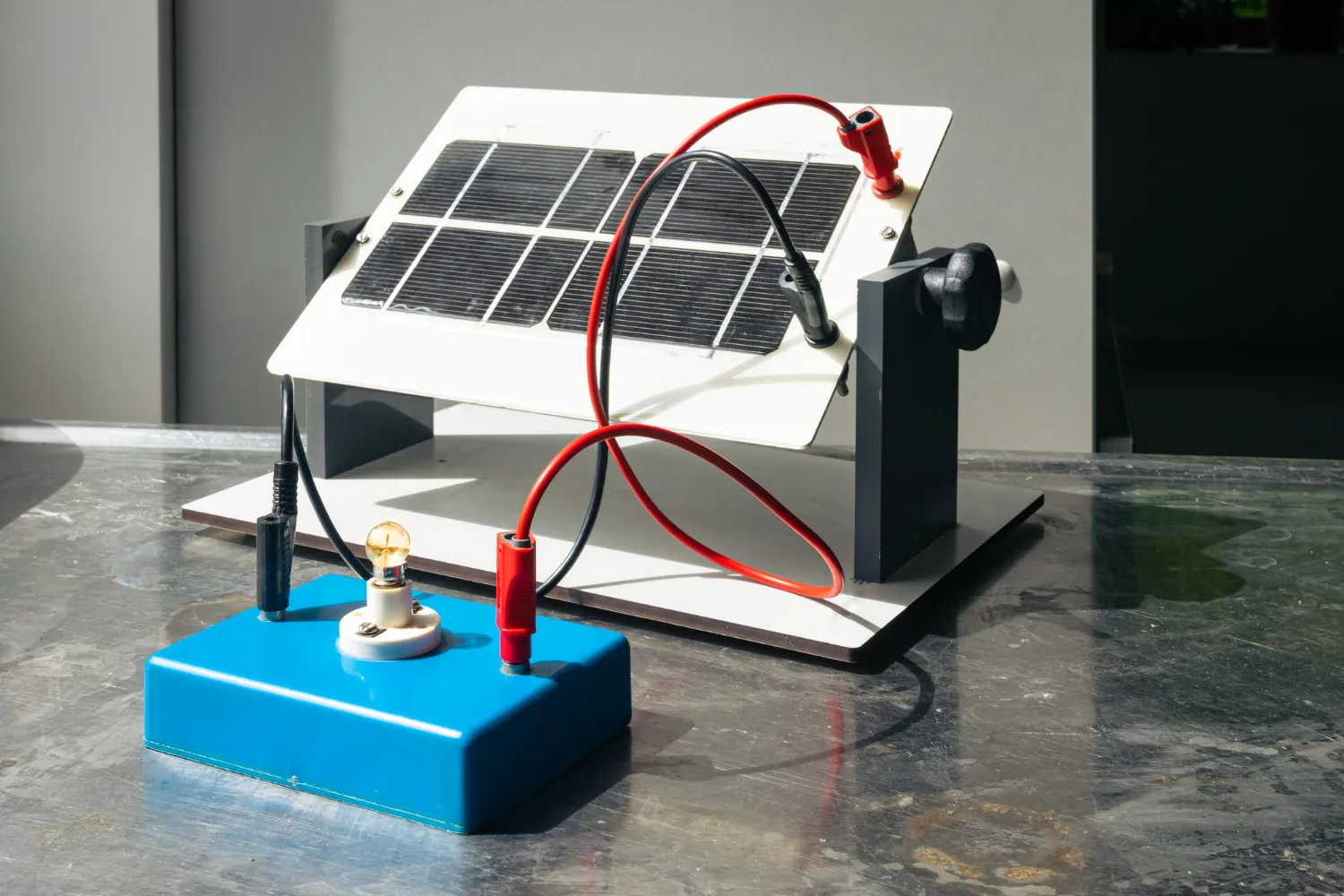

Have you ever wondered how solar panels work to convert sunlight into electricity? Solar energy has become increasingly popular as a clean and renewable energy source, but the process of harnessing the sun’s energy may seem mysterious to some. We will delve into the inner workings of solar panels and explain how they are able to generate electricity from sunlight.

The Photovoltaic Effect Unveiled
At the heart of every solar panel lies a remarkable phenomenon known as the photovoltaic effect, a cornerstone in the conversion of sunlight into electricity. This process unfolds when the energy from the sun’s rays engages the solar cells. Picture the scene: a beam of sunlight touches down on the panel; within these cells, this sunlight is more than just light—it’s a key that unlocks a flow of electrons. The silicon atoms, abundant in the cells, eagerly absorb this solar energy, which nudges the electrons within them into an excited state. Suddenly freed, these electrons begin to dance and move, creating a buzz of activity that forms an electric current. This movement isn’t random chaos, though; it’s a directed flow of energy, a choreographed leap from one atom to another, which gathers momentum to generate electricity.
Transforming Sunlight into Power for Our World
This electric current, initially a whisper of potential, becomes a shout of possibility as it’s captured and directed, ready to breathe life into our homes, our gadgets, and even our cities. The photovoltaic effect, thus, is not just a scientific curiosity; it’s the engine of solar energy conversion, a process that lies at the confluence of nature and technology, transforming the sun’s boundless vigor into a form of energy that can illuminate our world.
From Sunlight to Electricity: A Step-by-Step Process
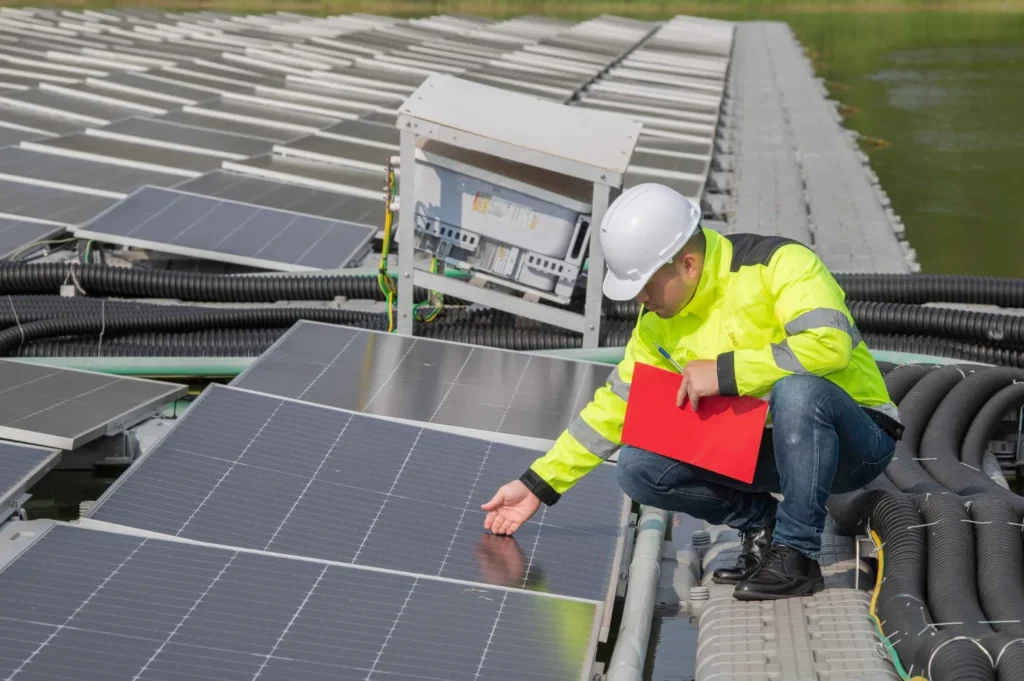
The journey from sunlight to electricity starts with the subtle, yet profound absorption of solar rays by photovoltaic cells. Picture a daybreak, as the first rays of sun grace these cells, a dance begins within. These cells, rich with the promise of silicon, eagerly soak up the sunlight, much like the earth welcomes a gentle rain. This is where the magic starts; the sunlight’s energy, potent and pure, sets electrons in motion, creating a silent, yet powerful surge of electric potential.
The Birth of an Electric Field
This surge is more than just movement; it’s the birth of an electric field within the confines of each cell, a field that guides the electrons, nudging them along a predefined path. The movement of these electrons is no mere meander; it’s a directed sprint towards their destiny, generating what we know as direct current (DC) electricity. This electricity, raw and unrefined, holds within it the power to illuminate, to energize, to bring to life the technologies that define our modern existence.
Converting Sunlight into Usable Power
Yet, this is not the electricity’s final form. Before it can light our homes or charge our phones, it must undergo a transformation. The DC electricity, direct and straight, is converted into alternating current (AC), a form more suited to our daily needs. This transformation, critical and complex, bridges the gap between the potential of the sun and the realities of our electrical demands, completing the journey from a ray of sunlight to the power that drives our world.

Generation of Direct Current (DC) Electricity
As the sun’s rays are absorbed by the photovoltaic cells within solar panels, a fascinating transformation begins. These cells, buzzing with newly excited electrons, initiate a dynamic flow of energy. This flow, raw and powerful, manifests as direct current (DC) electricity. It’s a type of electricity akin to what flows from the batteries that power our handheld gadgets, distinct in its unidirectional movement of electrons. Unlike the alternating current (AC) used in our homes, which oscillates back and forth, DC electricity moves steadily in a single direction, offering a consistent stream of power.
In this context, the solar panel acts as a conduit, channeling the boundless energy of the sun into a tangible, usable form. However, for this energy to illuminate our living spaces or animate our appliances, it must first be transformed. This necessity gives rise to the role of inverters, devices that convert DC into AC, thereby making the sun’s infinite energy accessible and applicable to our everyday lives.

Enhancing Efficiency and Maximizing Output
To boost the performance of solar panels, careful attention must be given to their positioning; an optimal tilt and direct exposure to sunlight dramatically elevate their efficacy. Furthermore, the caliber of the photovoltaic cells themselves, along with the overall system design, are pivotal in pushing the boundaries of efficiency.
By fine-tuning these aspects, one can significantly amplify the amount of electricity generated, making the most of the solar panels’ potential to convert the sun’s energy into power for our use. This pursuit of enhanced efficiency is not just about producing more energy but doing so in a way that aligns with the principles of sustainability and environmental stewardship.